
Cheap vs Professional Website: What the Price Difference Really Covers

Ask three providers to build a website for your plumbing company, clinic or boutique and you may get three quotes that differ by a factor of ten. All three will call it “a website.” If you run a small business in the US or Canada, you have probably wondered what you would actually get for the extra money, or whether you are being upsold.
I am not going to quote you market averages, because I would be making them up. What I can do is explain what tends to differ between a very cheap site and a properly built one, so you can judge any quote on its contents. A cheap site is not automatically a bad idea. It just has to be honestly described as a simple starter, not as a finished tool for the business.
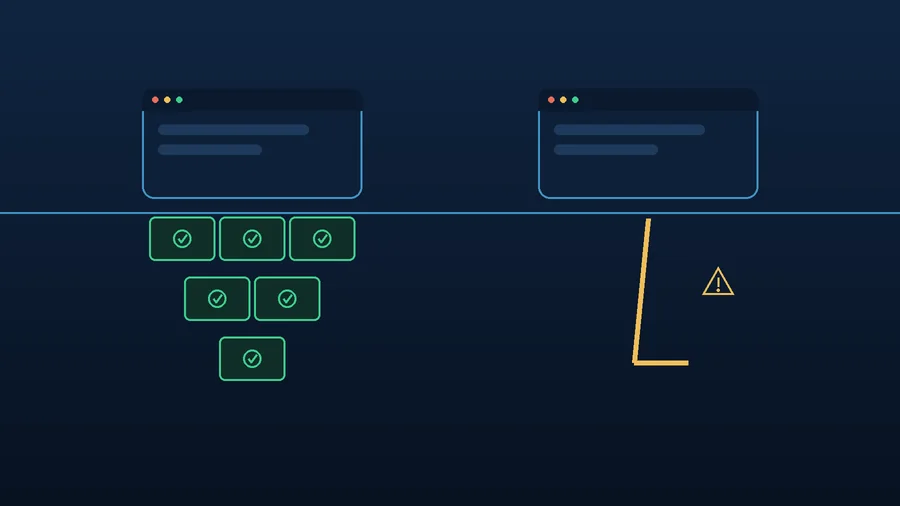
What a price actually covers
A number on a quote means little until you know what sits behind it. A solid quote spells out the page structure, how the site looks on a phone, working contact forms, basic search engine setup, a backup before and after launch, who owns the domain and hosting, and what support you get once the site is live.
Price differences usually come from decisions about those things, not from the page count. Who writes the text? Who tests the forms? Who sets up sales tax or shipping if you sell online? Does anyone configure email so your quote requests do not end up in a Gmail spam folder? A very low price often means these questions are simply skipped, or left for you to discover later.
Where the risk sits
The danger starts when a provider promises a “turnkey website” and never says what that key opens. Say a roofing contractor in Texas pays a rock-bottom price. The site looks decent. Then the first plugin update scrambles the layout, the contact form quietly stops sending to the owner’s inbox, the photos load slowly on a phone, and nobody has a backup. A year on, the contractor is paying someone to rebuild it. The low price was real, and so was the bill that followed.
The same story can play out in Canada with a dental office whose site must work in English and French, or a boutique whose online checkout was never set up correctly for GST/HST. A properly built site is not about looking more expensive. It is about not leaving these jobs for later.
What you can do before you decide
- Ask each provider to list what their quote includes, in writing.
- Confirm that the domain and hosting accounts will be in your name, with you holding the logins.
- Find out who handles updates and what happens if something breaks after launch.
- Ask whether a backup is made before and after launch, and where it is stored.
- Check whether the contact form will be tested on a phone and on a computer.
- Compare how much responsibility each quote takes on, not just the final figure.
If you want help reading a quote line by line, how to read a website quote walks through it.
When a small budget makes sense, and when it does not
If all you need is a simple online business card to get started, a modest budget can be perfectly reasonable. A one-page site with your services, your phone number and a form is a fine first step, as long as everyone agrees that is what it is.
It gets riskier when the site must take inquiries, work alongside Google Ads or a Google Business Profile, handle online orders, or survive updates without breaking. In those cases I would pick clearly defined responsibility over the lowest number. My pricing page shows how I price care plans, rentals and one-time work, in US dollars, so you can compare like with like.
If you would rather spend your time running the business than decoding a quote, I can take the technical side off your plate and explain what each line of the price pays for.
Questions owners ask about cheap and professional websites
Is a very cheap website a bad idea for a small business? Not necessarily. It becomes a bad idea when it is sold as a complete solution while skipping testing, backups and ownership of your accounts.
Why do website quotes in the US and Canada vary so much? Because providers include different things. One may price only the design, another also covers copy, setup of forms and email, backups, testing and support after launch.
How can I tell what is missing from a low quote? Ask what happens after launch. If nobody can tell you who updates the site, who holds the logins and what is backed up, those gaps will cost you later.