
Why a Cheap Website Gets Expensive a Year Later

A cheap website is not automatically a bad one. Plenty of small businesses in the US and Canada need nothing more than a simple start: a few pages, a phone number, a contact form and an honest description of what they do.
The trouble begins when a low-cost site is sold as a finished solution but built with no structure, no notes and no solid technical base. Month one looks great. Then real life arrives. You want to change a price, the menu breaks on your phone, you lose the login, and every small task turns into its own repair job with its own invoice.
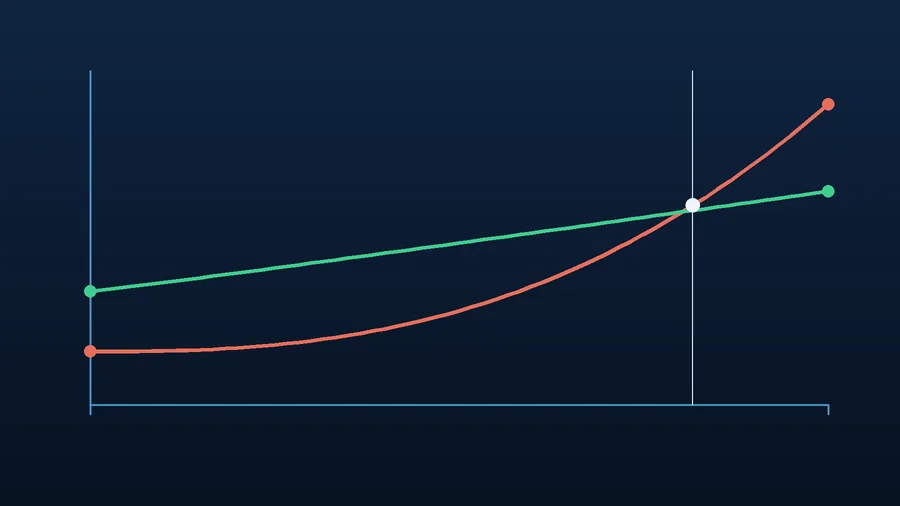
Why a cheap website gets expensive later
Even a budget site needs a minimum of order: logins that belong to you, a simple page structure, a form that has been tested, a layout that works on a phone, a backup, and a short note on how to edit the text yourself.
The costs creep in where those basics were skipped. Pages assembled with no plan. Far too many plugins. Photos uploaded straight off a phone at full size. A contact form nobody ever tested. Access kept in the builder’s personal account, so you cannot reach your own site without asking permission.
Where the risk is highest
If the site supports advertising or a steady flow of inquiries, the stakes go up. Imagine a landscaping company in Ontario that pays for ads in spring, sending people to a thin page where the quote form quietly fails. Or a law office in Georgia whose site breaks after an automatic update just before a busy filing season. Each weak spot costs money, and moving to a different web professional can mean rebuilding everything because nobody can make sense of the original work.
What you can do before you order
- Ask for a list of every plugin and tool the site uses.
- Find out who will hold the logins to your domain, hosting and site, and insist they be in your name.
- Request a backup right after launch, and ask where it is kept.
- Open the site on your phone and send yourself a test message through the form.
- Ask for a short explanation of how to change text and photos on your own.
The costs that appear after a website launches are worth reading before you sign anything.
When it makes sense to bring in help
Starting small is a perfectly valid choice, as long as it is done carefully and described honestly. A simple site on a proper foundation beats a flashy mess that must be untangled a year later. Sometimes starting over costs less than fixing somebody else’s shortcuts.
If you want a simple first site that will not turn into surprise bills, I can build or repair it on a sound technical base, with notes you can keep. A rental plan bundles the setup and ongoing care into a predictable monthly cost, which many owners prefer to a large one-time payment. Prices are in US dollars.
Questions about low-cost websites
Is it a mistake to start with a cheap website? No. It becomes a mistake when the cheap site is expected to behave like a fully built one, with ads, bookings and online orders it was never designed to handle.
How do I know if my cheap site is already causing hidden costs? Look for slow pages on mobile, forms that fail, repeated small repair bills and logins you cannot access. Those are early signs.
Should I rebuild or repair? It depends on how much of the site is usable. A short review will tell you whether fixing the foundation is cheaper than starting again.